ADULT CPR · A GUIDE FOR BYSTANDERS
How to Perform
CPR
When someone suddenly collapses, your actions can save a life.
If someone suddenly collapses, is unresponsive and is not breathing normally,
call 119 and start chest compressions.
Occasional gasping or abnormal breathing can also be a sign of cardiac arrest. Do not delay chest compressions to check for a pulse.
STEP 01
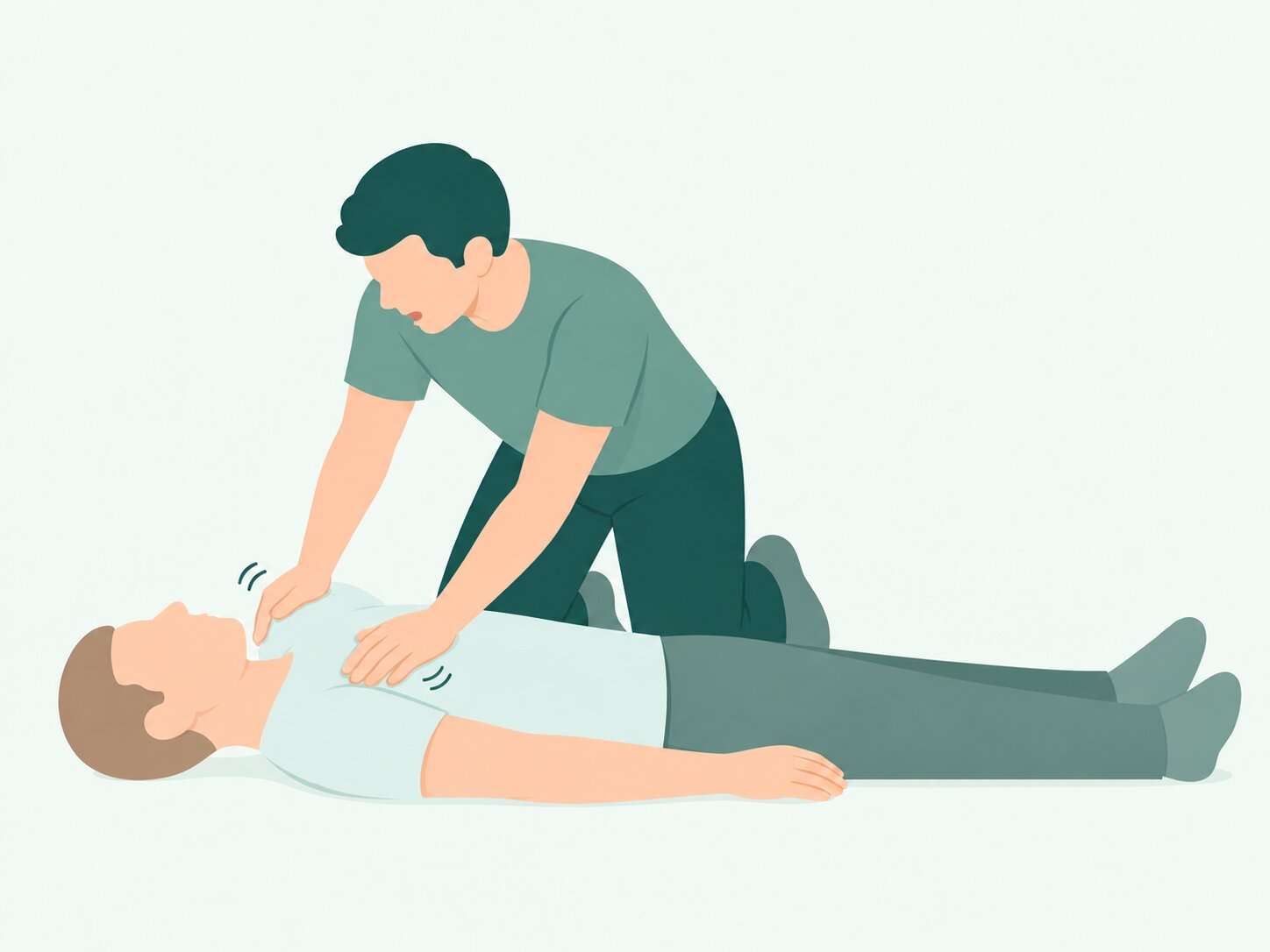
Check for safety and responsiveness
Check for hazards such as traffic or electricity. Gently tap both shoulders and ask loudly, “Are you okay?”
If there is no response, shout for help immediately.
STEP 02
Call 119 and ask for an AED
Point to a specific bystander and ask them to call 119 and bring an automated external defibrillator (AED). If you are alone, put your phone on speaker and follow the emergency dispatcher’s instructions.
Check breathing for no more than 10 seconds. If the person is not breathing normally or is only gasping, start chest compressions.
STEP 03
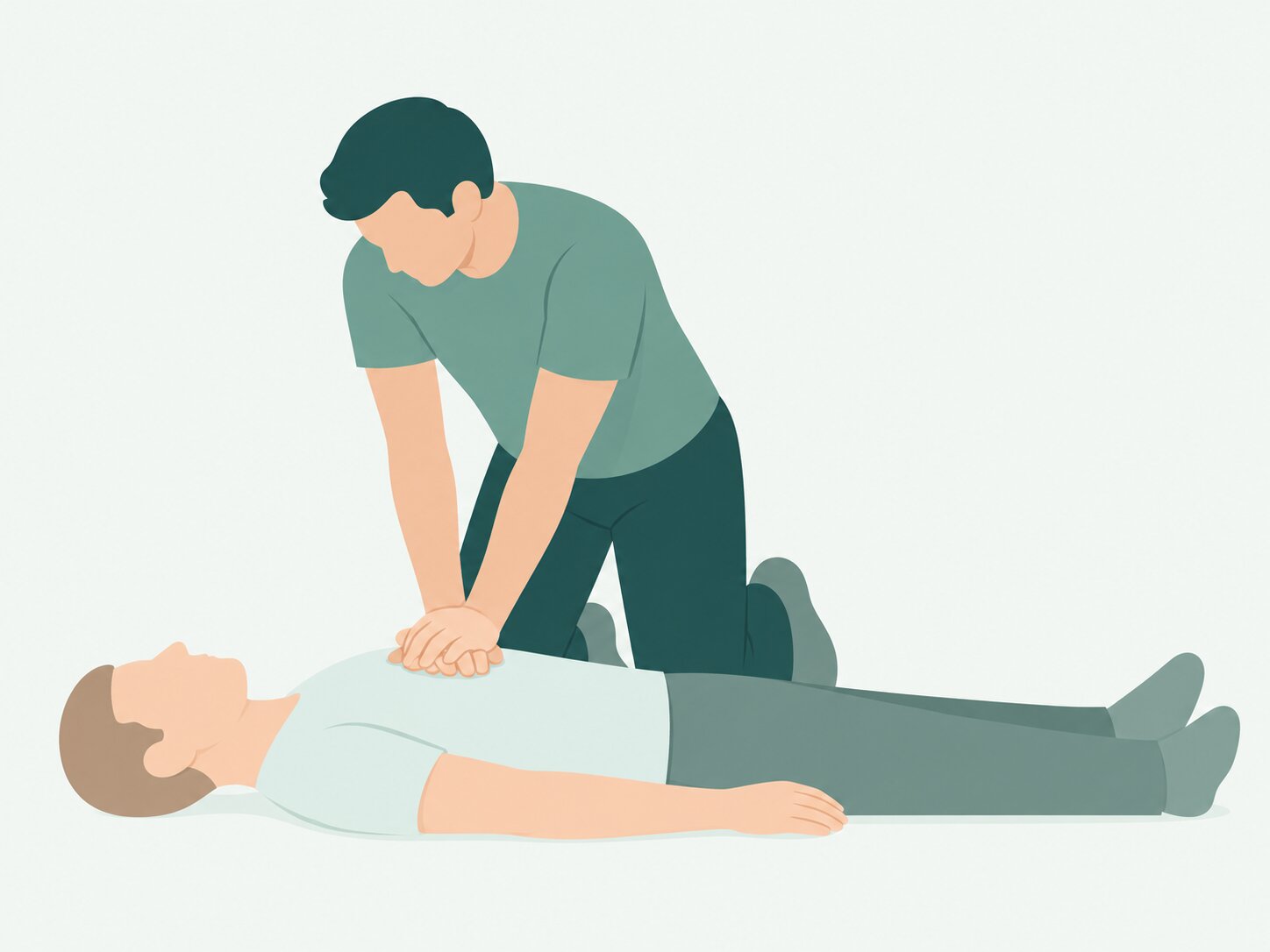
Push hard and fast in the center of the chest
Kneel beside the person, who should be lying on their back on a firm, flat surface. Place the heel of one hand in the center of the chest, on the lower half of the breastbone. Place your other hand on top and interlock your fingers.
Keep your elbows straight and your shoulders directly above your hands. Compress about 5 cm deep at a rate of 100–120 compressions per minute. Avoid compressing deeper than 6 cm.
100–120/minCompression rate
About 5 cmCompression depth
Allow the chest to fully recoil after each compression. Keep the heel of your hand in contact with the chest without leaning on it. Minimize interruptions.
STEP 04
Use the AED as soon as it arrives
Turn it on and follow the voice prompts. Expose the chest and dry it if wet, then attach the pads as shown in the diagrams on them. If another rescuer is present, continue chest compressions while the AED is being prepared.
Make sure no one touches the person while the AED analyzes the rhythm or delivers a shock. Resume chest compressions immediately after a shock, or when the AED says no shock is needed.
How long should you continue compressions?
Continue until emergency responders arrive and take over, or the person becomes responsive and starts breathing normally. If someone can help, switch rescuers about every 2 minutes and keep interruptions brief.
If you cannot give rescue breaths
For an adult who suddenly collapses, continue chest compressions alone. If you are trained and able to give rescue breaths, repeat cycles of 30 chest compressions and 2 rescue breaths.
This guide covers sudden cardiac arrest in adults. Rescue breaths are especially important for children, infants and people who have drowned. Follow the emergency dispatcher’s instructions.